ADHD belongs to the group of so-called neurodivergent forms of thinking, perceiving, and behaving. Neurodivergence describes biological differences in how the brain processes stimuli, regulates emotions, and interacts with the environment. [1] [2]
For a long time, ADHD was primarily diagnosed in boys. Girls and women with ADHD often went undetected – and minorities, such as people with a migration background (BIPoC), are even more frequently overlooked or misdiagnosed. They only receive their diagnosis in adulthood, often due to misunderstandings, societal norms, and years of silent conformity that mask the problem for a long time. [3]
On this page you will find easy-to-understand information about
What is ADHD?
ADHD (Attention Deficit Hyperactivity Disorder) affects approximately 4–6% of children and adolescents and often persists into adulthood. [4] For a long time, ADHD was considered a “boys’ disorder,” which meant that girls and women in particular were overlooked.
The three core symptoms are inattention, impulsivity, and hyperactivity: [3]
1. Inattention
-
Difficulties completing tasks , because they get distracted by other things and start new tasks, as they often misjudge the time.
Example: You want to hang up the laundry, start doing so, but get distracted by your phone, suddenly sort the refrigerator or "quickly" do other tasks – in the end, no task is properly completed.
-
Forgetfulness regarding appointments or everyday tasks
Example: You not only forget appointments, but you are often late for appointments or meetings because you misjudge the time or wanted to do other things on the way.
-
Problems with setting priorities or keeping track of things
Example: Instead of emptying the refrigerator first, you start vacuuming the apartment while the trash is still full.
-
Easily distracted by noises, visual stimuli, thoughts, or daydreaming
For example, you find it difficult to listen or stay focused during conversations – especially on topics that don't interest you. At the same time, you can develop hyperfocus in areas that fascinate you and be completely absorbed for hours, barely noticing the outside world. When hyperfocused, you might forget to eat, drink, or go to the toilet. When driving, important information such as right-of-way rules or traffic signs is often overlooked because thoughts wander.
-
Tendency to overlook details or to follow instructions incompletely
Example: You are assembling a piece of furniture and skip small but important steps, causing it to wobble.
2. Impulsivity
-
Spontaneous decisions without considering possible consequences
Example: Spontaneous purchases, short-notice holiday bookings without planning, immediately accepting tasks at work even though time is short.
-
Do they interrupt others while they are speaking or give hasty answers?
Example: In a meeting, you immediately give your opinion before the other person has finished speaking. In conversations, you offer solutions right away without waiting for the situation to develop fully.
-
Difficulties controlling emotions
Example: Sudden outbursts of anger when something doesn't go according to plan, or excessive joy at small successes.
-
Impulsive actions that are later regretted
Example: Spontaneously clearing out the apartment in the middle of the night, even though sleep is actually needed. Suddenly starting renovations or DIY projects without properly planning materials or time.
3. Hyperactivity
-
Increased urge to move , especially in children
Example: Fidgeting in the chair, frequently getting up during class
-
Inner restlessness, constant racing thoughts , feeling "unable to switch off"
Example: In the evenings it is difficult to relax, you constantly fiddle with objects, scroll on your phone, have trouble sleeping or tend to engage in riskier actions such as speeding to relieve nervousness or boredom.
-
Difficulty sitting still or concentrating on an activity for an extended period of time
Example: During a long phone call or while reading the newspaper, you keep getting up or doing something else.
-
Tendency to always be busy or to work in a multitasking manner
Example: Folding laundry, answering emails and emptying the dishwasher all at the same time – but nothing really gets finished.
In adults, hyperactivity often manifests internally: inner restlessness, racing thoughts, the feeling of "not being able to switch off". Previously, ADHD without obvious hyperactivity was referred to as ADD. However, this classification is now considered outdated. Today, the term ADHD is used consistently, and a distinction is made between the subtypes: predominantly hyperactive-impulsive, predominantly inattentive, or combined.
In ADHD , baseline dopamine levels are often lower than in neurotypical individuals. Dopamine regulates motivation, reward, and drive. A deficiency can lead people with ADHD to seek stronger or more frequent stimuli in order to feel awake, focused, or rewarded. [5]
Comorbidities in ADHD
Many unrecognized or untreated adults with ADHD develop comorbid conditions such as depression, anxiety disorders, addictions, or eating disorders during their lifetime. Because these diseases are more common and easier to recognize, they are usually diagnosed first. Sometimes, the underlying cause of ADHD is only recognized during the course of therapy – unfortunately, this is often not the case. Many psychotherapists are not yet sufficiently familiar with ADHD in adults, so the disorder frequently goes undetected . Instead, those affected sometimes receive incorrect diagnoses such as borderline personality disorder or bipolar disorder. [3] [6] [7]
The reason why people with ADHD are particularly susceptible to such comorbidities is related to several factors:
1. Chronic stress and overexertion
- Everyday life, work, and social demands are difficult for many affected individuals.
- Constant distractibility, inattentiveness, and impulsiveness lead to repeated frustrations.
- The feeling of "never being good enough" and "being too much for others" can promote depressive symptoms in the long term.
2. Emotional dysregulation
- People with ADHD often have difficulty controlling their emotions.
-
Difficulties at work, in relationships, or in the family
3. Self-esteem problems and social experiences
- Low self-esteem often arises due to misunderstandings, constant criticism, or the feeling of having to conform.
- Isolation or repeated failures in everyday life increase the risk of depression.
4. Search for short-term stimulation
- Due to their low baseline dopamine levels, many affected individuals actively seek stimuli to experience motivation and reward.
- This can manifest itself in addictive behavior, e.g., through alcohol, nicotine, drugs, gambling, or impulsive purchases.
Comorbid conditions don't arise by chance, but are often a consequence of unrecognized ADHD symptoms, difficulties in daily life, and repeated emotional stress. Early diagnosis and appropriate support can significantly reduce the risk.
ADHD in women
Many girls learn from an early age to be quiet, to function, and to conform. This societal expectation often leads to ADHD being well-hidden – sometimes for decades. Many women develop elaborate strategies to conceal their symptoms, such as perfectionism, over-adaptation, high social competence, or constant striving for achievement.
They often grow up feeling "too sensitive", "too chaotic" or "too much on their minds" – without knowing that ADHD is the underlying cause.
Typical signs in women:
-
Constant overthinking , rumination, and mental exhaustion
-
Strong emotional reactions and rapid mood swings
-
Feeling overwhelmed in everyday life , even with seemingly small tasks
-
Exhaustion due to constant compensation and pressure to adapt
-
Difficulty concentrating , chaotic daily routines, problems with planning and organization
-
Emotional instability and the feeling of being "different" or not resilient.
Many report a persistent feeling of inadequacy and recurring conflicts at work, in partnerships or friendships – often without knowing the actual cause.
Hormonal changes can worsen ADHD symptoms, for example during puberty, pregnancy, the postpartum period, or menopause. [3]
Stress in the role of motherhood
When organization, sensory processing, or emotional regulation are difficult, motherhood can be particularly challenging. Many women with ADHD quickly feel overwhelmed, compare themselves to other mothers, or experience shame because they believe they are "not in control." From the outside, such difficulties are often mistakenly perceived as personal failure—and not as a symptom of undiagnosed ADHD. [9] [10]
Stimming for self-regulation
Stimming refers to repetitive movements or actions that help to calm the nervous system, focus attention, or release excess energy. Many women with ADHD consciously or unconsciously use stimming to cope with stress, sensory overload, restlessness, or understimulation. [11]
It is not uncommon for women with ADHD to also develop body-focused repetitive behaviors (BFRBs) such as skin picking, nail biting, lip or cheek biting, or hair pulling. Research often links these behaviors to coping with tension, emotional overload, or understimulation, and they can unconsciously contribute to short-term self-regulation.
Stimming can occur through different senses: [12]
1. Sense of touch:
- picking at skin or cuticles
- Rotate, click, or press rings
- Playing with hair
- Fabrics or surfaces feel
2. Mouth / Oral:
- Nail biting or chewing on objects
- Lip or cheek biting
- Humming, whistling, tongue clicking or murmuring
3. Body movements:
- Playing with fingers or objects
- Repetitive movements such as rocking, tapping, or rhythmic knocking
- flapping arms
4. Smell:
- Smell your hands, spices, etc. repeatedly.
Stimming helps to balance the senses, regulate the nervous system, and stabilize emotions in the short term. In BFRBs, this often happens unconsciously, but can be a form of self-soothing and emotional regulation.
Skin picking and other BFRBs in ADHD
BFRBs (Body-Focused Repetitive Behaviors) may occur more frequently than average in ADHD because people with ADHD:
- have a more understimulated nervous system
- experiencing difficulties with emotion regulation
- unconsciously regulate stress, pressure, or boredom using BFRBs
Many describe a trance-like, calming feeling, followed by shame or frustration.
Research on BFRBs in ADHD, particularly skin picking, is still in its early stages. The available studies and findings are currently very limited, which is why many mechanisms and risk factors still need to be investigated. [3] [13]
Fidget toys as a supporting strategy
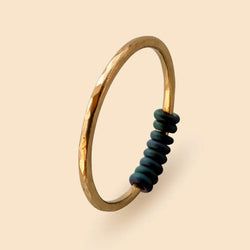
Fidget toys such as fidget rings (anxiety rings, spinner rings), stress balls, clickers or fidget toys offer tactile and motor stimulation to regulate the nervous system. Fidget toys enable conscious and controlled stimming, supporting emotional and sensory self-regulation without causing physical harm like skin picking or hair pulling. They thus represent a practical addition to everyday self-regulation strategies. You can find more information on how to use a fidget ring to combat skin picking or nail biting here . [14] [15] [16] [17]
Further resources & book recommendations
- The world of women and girls with ADHD: Why they are so special and what makes them strong - Christine Carl, Swantje Matthies, Christa Koentges, Ismene Ditrich
- ADHD: The Hidden Strength Within Us - The Journey from Chaos to Self-Acceptance in the Context of Neurodiversity - Katharina Schön
- Therapy Tools for ADHD in Adulthood - Peter Kirsch, Nina Haible-Baer
- Your workbook against mental chaos: Strategies and methods for neurodivergent people - For ADHD and high sensitivity - Katharina Schön
- Carnival in my head: How I found out as an adult that I have ADHD - Angelina Börger
- https://www.adhs.info/
- https://gemeinsam-adhs-begegnen.de/
- https://www.guardianofmind.com/
List of sources
[3] Christine Carl, Ismene Ditrich, Christa Koentges, Swantje Matthies. (2022). The world of women and girls with ADHD: Why they are so special and what makes them strong.
[8] Soares, G., et al. "On the 'border-lines' of ADHD: Personality Traits, Diagnostic Overlaps and Clinical Implications." European Psychiatry 68.S1 (2025): S358-S359.
[9] Murray, Ashley Marie. Queens of Chaos: How ADHD Affects the Experience of Motherhood . Diss. Lesley University, 2025.
[10] Collins, Elizabeth. "ADHD and the Transition to Motherhood: Parenting Stress, Satisfaction, and Efficacy in First-Time Mothers With and Without ADHD." (2025).
[11] Puschel, Anna. "Dancing Hands: On Neurodivergent Embodied Knowledge." Social Inclusion 13 (2025).
[13] La Buissonnière-Ariza, Valérie, et al. "Body-focused repetitive behaviors in youth with mental health conditions: A preliminary study on their prevalence and clinical correlates." International Journal of Mental Health 50.1 (2021): 33-52.
[14] Hanchate, Madhura Dinesh, Sarvesh Tripathi, and Tripti Singh. "Comparative Study of Fidget Toys on Adults' Attention Span and Concentration." Securing the Future through Sustainability, Health, Education, and Technology . Routledge, 2025. 373-382.
[15] Hanchate, Madhura Dinesh, Sarvesh Tripathi, and Tripti Singh. "Comparative Study of Fidget Toys on Adults' Attention Span and Concentration." Securing the Future through Sustainability, Health, Education, and Technology . Routledge, 2025. 373-382.
[16] Son, Ha Min, et al. "A quantitative analysis of fidgeting in ADHD and its relationship to performance and sustained attention on a cognitive task." Frontiers in psychiatry 15 (2024): 1394096.
[17] Yedidi, Raagini Suresh, John Koo, and Jenny E. Murase. "Habit reversal therapy for skin picking disorder." Cutis 111.4 (2023): 192-193.