Adult Autism: Stimming, Masking, and Fidget Toys

Autism is a neurodevelopmental form of neurodivergence that affects how people perceive and process social situations, communication, stimuli, and their environment. Autism manifests differently in each individual. [1]

For a long time, autism research predominantly focused on male, white boys. As a result, women and other underrepresented groups were often less considered in research. This can contribute to autism in women and BIPoC being diagnosed later or less frequently.

Another possible reason is the different socialization experiences of girls and boys. Girls are often expected early on to be socially adaptable, empathetic, reserved, and oriented towards social relationships. Some autistic girls develop strategies early on to compensate for difficulties in social situations or to hide their own needs. This so-called masking or camouflaging can make autistic traits less visible to others. Studies indicate that autistic women camouflage more frequently on average than autistic men. [2]

On this page, you will find understandable information on:


What is autism?

Autism is a neurodevelopmental variation in human perception and processing with a strong genetic component. It is estimated that autism affects about 1% of the population. [3]

Typical characteristics include social communication and interaction, as well as repetitive (stereotypical) behavior patterns and the processing of stimuli.

1. Social Communication and Interaction

  • Difficulties intuitively understanding unspoken social rules
  • Uncertainty in small talk or group conversations
  • Difficulties interpreting irony, hints, or non-verbal signals
  • Need for clear and direct communication
  • Exhaustion after extended social situations


2. Routines and Changes

Many autistic people have a strong need for predictable routines and fixed patterns. Unexpected changes, however, can be particularly exhausting.

This can mean, for example:

  • Changes in plans lead to stress
  • Spontaneous appointments feel burdensome
  • Certain routines provide security
  • Decisions can be strenuous if too many options exist
  • After an unplanned event, time is needed to re-regulate
  • Strong need for control and routines


3. Sensory Processing

The processing of sensory stimuli can also be different in autism. Some people are particularly sensitive to certain sounds, light, touch, smells, or textures. Others, however, actively seek out specific sensory stimuli.

Examples can include:

  • Sounds can quickly be perceived as unpleasant or overwhelming
  • Certain clothing or materials feel uncomfortable
  • Bright light or many people can be overwhelming
  • Certain movements, sounds, or touches are perceived as pleasant

Autism is a spectrum. This does not mean that all autistic people have the same traits or difficulties. Some require a lot of support in daily life, while others live, work, and maintain relationships largely independently.


Autism in Women

Autism has long been studied and recognized primarily based on characteristics observed in boys and men. As a result, women and girls with autism can be more easily overlooked.

An important factor here can be masking. Masking means that a person consciously or unconsciously tries to make autistic characteristics less visible. This can include, for example, observing and imitating other people, practicing social rules, or suppressing stimming.

Women on the spectrum, in particular, often mask so successfully that their autism remains undiagnosed for decades. Women learn early to imitate social rules and facial expressions. Special interests can often appear like normal hobbies (e.g., animals, books, series, music, sports).

Research on camouflaging describes, among other things, strategies of masking, compensating, and adapting. These strategies can temporarily help to cope with social situations but can also be very exhausting.

Possible Signs in Autistic Women

  • Strongly analyzing social situations
  • Replaying conversations repeatedly afterward
  • Consciously making eye contact
  • Social rules are consciously learned rather than intuitively understood
  • Observing and imitating the facial expressions of others
  • Thinking in advance about what to say in a situation
  • Enduring social situations despite feeling overwhelmed
  • Having a strong need for rest after meetings with other people
  • Stimuli such as sounds, light, or touch can quickly become overwhelming
  • Changes or spontaneous alterations of plans cause stress
  • Certain interests are pursued very intensely
  • Routines provide security
  • Stimming is done rather secretly or subtly
  • The feeling of constantly having to adapt can be very exhausting

These characteristics are not diagnostic criteria on their own. An autism diagnosis can only be made within the scope of a professional assessment.


What is Stimming?

Stimming stands for "self-stimulatory behavior" and refers to repetitive movements, sounds, or actions that can be associated with sensory or emotional regulation.

Stimming occurs in many autistic people and can look very different. For example:

1. Hands and Fingers

  • Moving fingers
  • Flapping hands
  • Rubbing fingers together
  • Pressing on objects
  • Turning or moving small objects
  • Playing with a ring

2. Body Movements

  • Rocking
  • Moving back and forth
  • Tapping feet
  • Rhythmic tapping
  • Swinging

3. Sounds

  • Humming
  • Repeating certain sounds
  • Quiet speaking or mumbling
  • Repeatedly listening to certain sounds

4. Tactile Stimuli

  • Touching certain materials
  • Feeling surfaces
  • Playing with hair
  • Repeatedly touching clothes or fabrics
  • Turning or feeling objects

Stimming can help regulate sensory input, support attention, or cope with stress and emotions.

Stimming doesn't always have to be obvious. Especially adults who have adapted or suppressed their stimming over many years may use very subtle forms. For example:

  • Twirling a ring
  • Playing with a piece of jewelry
  • Rubbing fingers together
  • Clicking a pen
  • Moving a foot under the table
  • Feeling a specific fabric texture
  • Moving small objects in the hand
  • Quietly tapping fingers on a surface

A discreet fidget toy can therefore be more pleasant in everyday life than a large or conspicuous one.

It's not about "removing" autistic traits. Rather, an object can provide a way to use a pleasant sensory stimulus without attracting much attention.


Fidget Toys for Stimming

Fidget toys can be a simple way to make a specific sensory stimulus available. They can be particularly practical in everyday life if they are:

  • Small and light
  • Always available
  • Can be used quietly
  • Don't attract much attention
  • Comfortable to hold
  • Allow a predictable movement

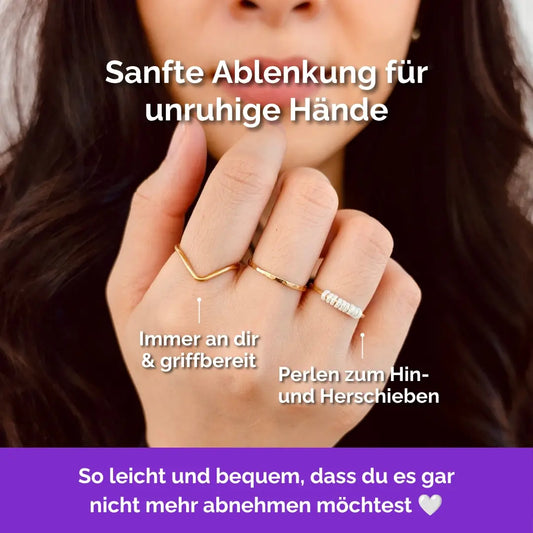
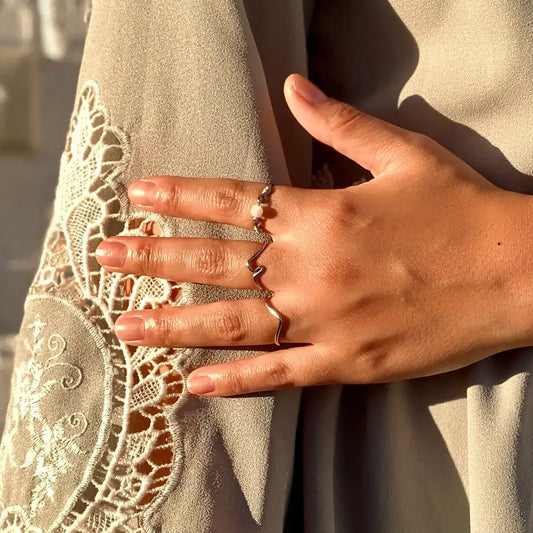
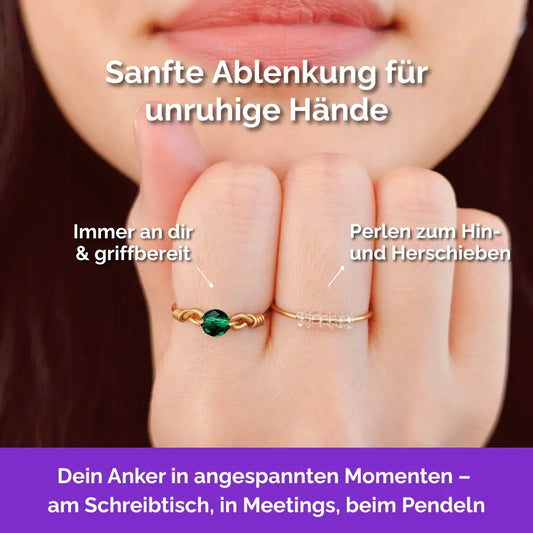
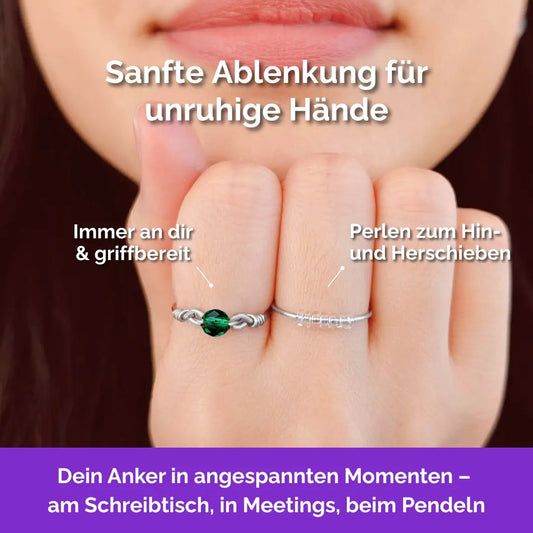
A fidget ring combines a sensory object with a piece of jewelry. Instead of carrying a separate fidget toy in a bag, a ring can be worn directly on the finger and twisted or moved as needed. This can be practical, for example, in the office, on the train, while watching TV, or during a conversation.

Not everyone with autism wants or needs a fidget. The same applies to stimming: what feels pleasant and regulating is individual.


Further Resources & Book Recommendations

Note: Some links on this page lead to external websites. These are unpaid recommendations for which I receive no compensation.
  • Unmasking Autism: Discovering the New Faces of Neurodiversity - Devon Price
  • UNMASKED: The Ultimate Guide to ADHD, Autism and Neurodivergence - Elli Middleton
  • The World of Autistic Women and Girls - Mannherz, Ditrich, Koentges
  • The Autistic Burnout Workbook: Your Guide to Your Personal Recovery Plan (Self-Care for Autistic People) - Dr. Megan Anna Neff
  • Typically Atypical - Career Biographies of Asperger Autistics: Individual Paths and Comparable Experiences - Kohl, Seng, Gatti
  • https://wohnzimmer-neurodivers.de/


References

[1] Barmer. (n. d.). Neurodiversity: What diagnoses are included? https://www.barmer.de/gesundheit-verstehen/psyche/psychische-gesundheit/neurodiversitaet-1300456#Welche_Diagnosen_zu00E4hlen_zu_Neurodivergenz-1415716 (Accessed on 20.08.2026)
[2] Hull, L., Lai, M.-C., Baron-Cohen, S., Allison, C., Smith, P., Petrides, K. V., & Mandy, W. (2020). Gender differences in self-reported camouflaging in autistic and non-autistic adults. Autism, 24(2), 352–363.
[3] https://gesund.bund.de/autismus#haeufigkeit (Accessed on 20.08.2026)